
Don't let doubt weaken your rights.
Tell us about your situation (adultery, custody, finances). We'll build a legal evidentiary strategy, calibrated for family court judges, and provide you with a report that your lawyer can use.
When a marriage falters, evidence becomes the central axis of an effective strategy: proving adultery, documenting a lifestyle contrary to a child's best interests, uncovering an insolvency scheme... Judges don't decide "by feel": they assess established facts, gathered fairly and proportionately. This is exactly where the private investigator (agent de recherches privées - ARP) comes in, as this is a regulated profession in France.
In France, evidence in divorce cases is open ("any means of proof"), but subject to certain conditions: no fraud, no violence, no unlawful intrusion into private life. The reference texts are clear: articles 259, 259-1 and 259-2 of the French Civil Code.
The aim of this article is to give you a practical and 100% legal guide to using a private detective in a divorce case, maximizing the admissibility of evidence and securing your proceedings while optimizing your chances of success before the Family Court.
Table of Contents
1. What the law says (simple & useful)
2. When to use a private detective in a divorce?
3. Admissible and inadmissible evidence in a divorce
4. Winning strategy: striking a balance between the right to evidence and respect for privacy
5. A private investigator's mission in divorce proceedings
6. What to expect from a Divorce Investigation
7. The number of divorces in France: the scale of the phenomenon
8. Why use a CNAPS-certified detective?
9. Frequently asked questions about using a private detective in divorce cases
What the law says (simple & useful)
In French law, the rule is clear: in divorce proceedings, proof is free. Article 259 of the French Civil Code stipulates that the facts invoked may be established by any means, including the confession of one of the spouses. However, there are limits to this freedom. The law forbids the involvement of children in grievances, and prohibits any evidence obtained by unfair means. For example, article 259-1 expressly excludes from the proceedings any evidence obtained by violence or fraud: clandestine recordings, e-mail hacking or any form of electronic espionage cannot therefore be used before the judge. Similarly, article 259-2 rules out the use of evidence gathered under conditions that violate privacy, such as intrusion into a private home without judicial authorization.
This is where the role of the private detective comes into its own. The private investigator, a liberal profession regulated by the French Internal Security Code (articles L621-1 et seq.), acts under CNAPS approval and in compliance with professional secrecy. His or her report may be submitted to a judge, provided that the methods used comply with the principle of loyalty, and that the invasion of privacy remains proportionate to the aim pursued. French jurisprudence insists on this point: each case is assessed on a case-by-case basis, according to the relationship between the seriousness of the facts sought and the means employed to establish them.
When to call in a private detective in a divorce?
Adultery / married life
Adultery remains a fault (obligation of fidelity - art. 212 C. civ., not cited here) and can be the basis for a divorce for fault or weigh in the consequences (damages, costs). The detective confirms a known cohabitation, recurrent outings, overnight stays... In public and without excess (limited tailing, targeted time slots, shots in open places). The winning combo: a detective to document, then a court commissioner's report if an intrusive act of observation is required (with authorization).
Childcare / best interests of the child
Prove an unsuitable environment (regular drinking, systematic delegation to third parties, schedules that interfere with school, endangerment) or non-execution of visitation rights. Surveillance in disputes concerning children is carried out outside the home, with objective traces (observations, schedules, concordant attestations), never intrusion into the home. The judge takes into account what is factual and proportionate.
Compensatory allowance / alimony
Many disputes revolve around under-declaration of income, a concealed lifestyle or organized insolvency. The ARP maps actual employment, ancillary income, useful assets (real estate, vehicles used, activities), OSINT elements (open sources) and field observations such as proving a community of life. Here again: proportionality & fairness.
Admissible and inadmissible evidence in divorce proceedings
Not all evidence is equal before a family court judge. Evidence obtained within a legal and proportionate framework is admissible, while other evidence deemed intrusive or unfair will be systematically rejected.
These include observations made in public places, such as following a spouse down the street, noting a repeated presence in a restaurant, recording movements in a parking lot, or photographing an entrance to a hall accessible to all. These observations, when accurately recorded (date, time, place) and linked to a coherent chain of events, form a solid evidential foundation. Similarly, a private investigator's detailed report, detailing the methodology employed, the limits of his mission and an appendix to the documents collected, is generally considered by the courts to be an evidentiary document that can be evaluated in the same way as other evidence. It gains in strength when supplemented by external elements such as tickets, online publications, testimonials or even a court commissioner's report, when the situation so requires and authorization has been granted.
On the other hand, there are a number of procedures that make the evidence illegal. This is the case for home invasions, capturing images from inside the home, hacking into mailboxes or computers, or clandestine recordings made without the person's knowledge. These procedures, prohibited by articles 259-1 and 259-2 of the French Civil Code, can lead to the outright rejection of evidence, or even to criminal sanctions. Case law also punishes excessive surveillance, carried out over too long a period or in an invasive manner. In this type of dispute, measurement and targeting are essential: limited but well-defined evidence is far more likely to be accepted than a disproportionate Investigation .
Winning strategy: striking a balance between the right to evidence and respect for privacy
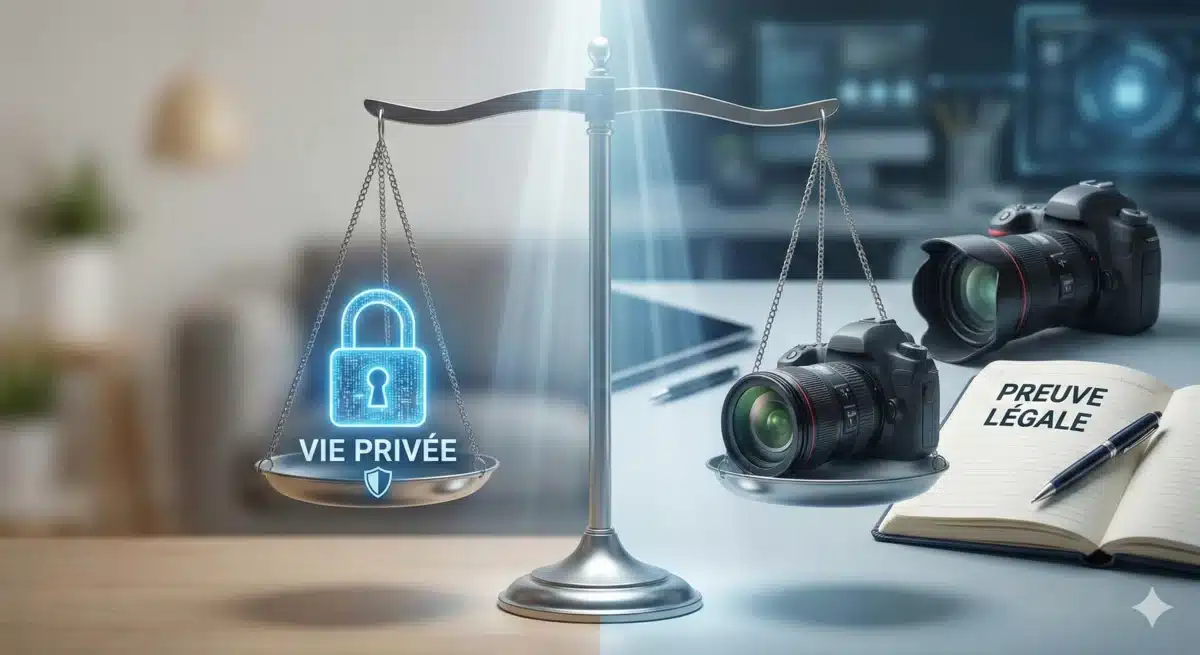
French law imposes a delicate balance: the right to evidence must never override the right to privacy. This is what the courts call the proportionality test. In practice, this means that theInvestigation must remain targeted. The dates and times chosen must correspond to specific clues, such as an expected message or movement, and not to general, continuous surveillance. The duration of a shadowing operation should be measured in days, not months. Last but not least, the collection of data must be carried out primarily in public or open places, where the person cannot invoke a legitimate expectation of privacy.
How a private investigator's divorce assignment works
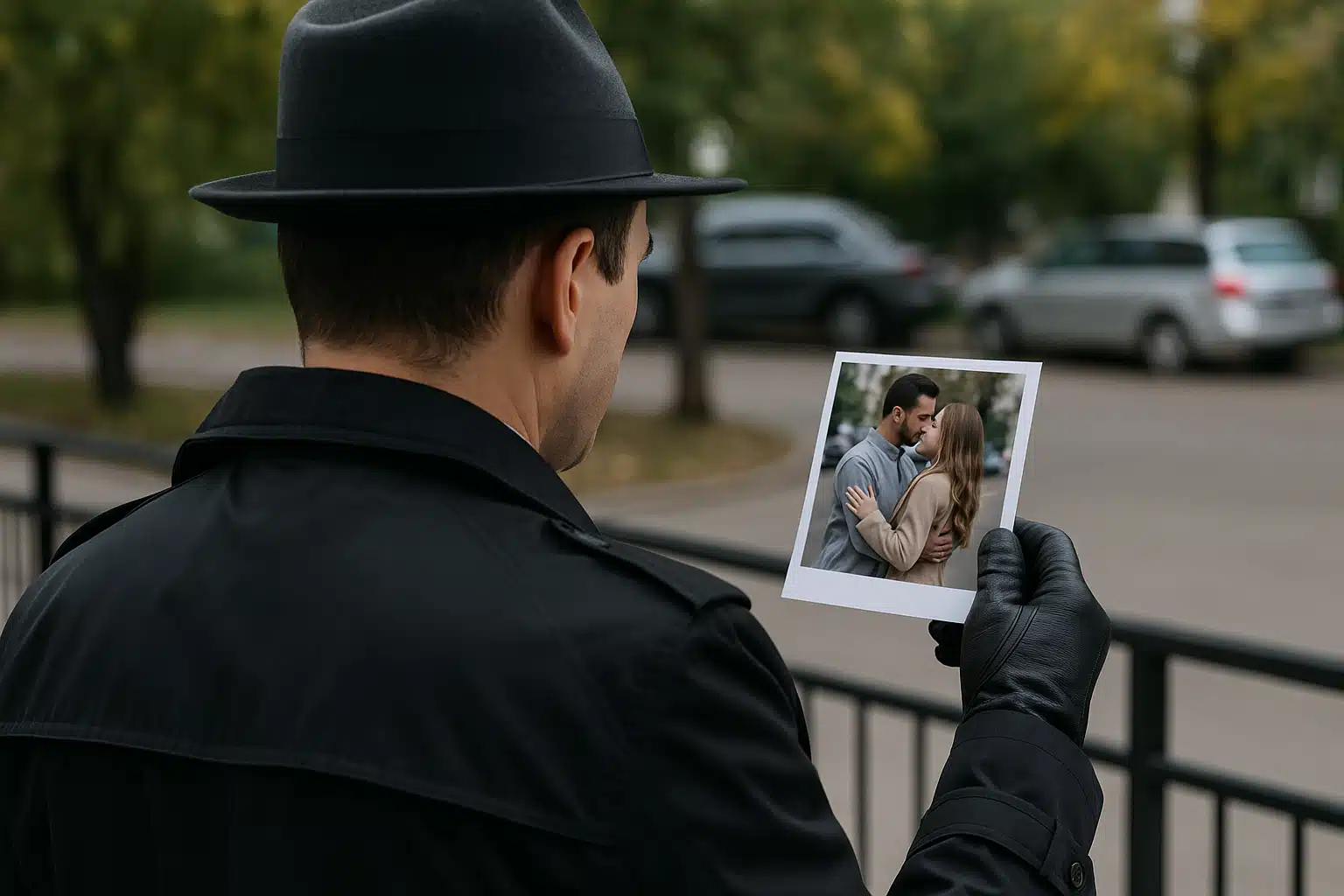
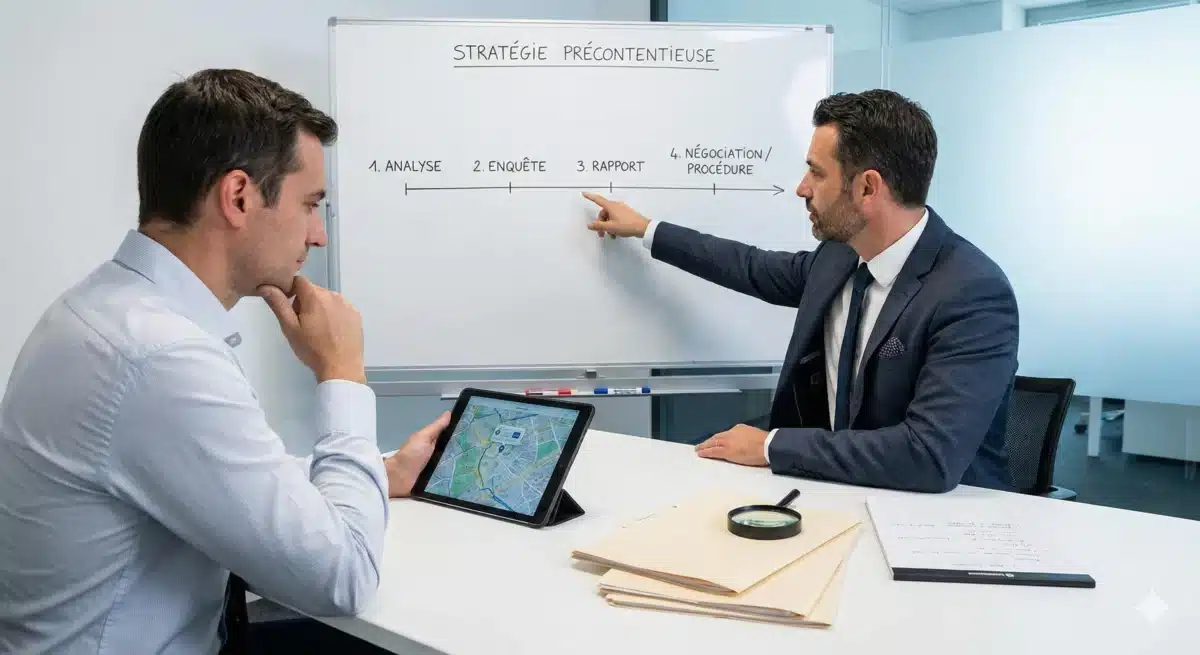
An assignment always begins with a confidential interview with the client. This discussion defines the evidential objective - proving a fault, preparing a custody application or verifying a financial situation - as well as the scope of theInvestigation : addresses, places frequented, constraints linked to children or the pace of work, budget and possible timetable. It is at this stage that the detective validates the legality and proportionality of the mission.
The next step is to draw up an observation plan. The days are chosen according to relevant events, such as the day before a trip or a recurring weekend, sometimes with a pair of agents to ensure discretion. The means used remain appropriate and in compliance with the law: vehicle, motorcycle, observation on foot. Intrusive or illegal gadgets have no place in a Probationary Investigation .
In the field, our work combines targeted shadowing and the exploitation of open sources (OSINT). Accessible social networks, public announcements and simple factual observations all feed into theInvestigation. The aim is to collect only what is necessary, and then to stop as soon as sufficient evidence has been gathered, in order to limit the invasion of privacy.
At the end of the assignment, the customer receives a structured report. This sets out the chronology of events, specifies the methods used, attaches any photographs or documents collected, and mentions the rules of confidentiality. This report is intended exclusively for the customer, his lawyer and the judge. When the case involves a private place, the association between a private detective and a judicial commissioner becomes essential: one documents, the other observes with judicial authorization. In all cases, the work is carried out in synergy with the lawyer, who validates upstream the admissibility and usefulness of the elements gathered.
What to expect from a Divorce Investigation
A private detective doesn't promise miracles, but he can provide a body of corroborating evidence that is difficult to contest. In cases of adultery or notorious cohabitation, the proof lies in repeated presence, lifestyle habits and unequivocal gestures observed in public, often reinforced by a court commissioner's report. When it comes to child custody, theInvestigation highlights factual behavior: regular lateness, unjustified absences, dangerous associations, delegation of custody to unplanned third parties. On the financial front,Investigation can establish objective elements such as actual professional activity, observable expenses, ownership of assets or evidence of concealed income, useful for rebalancing compensatory or alimony payments.
It's important to remember that the judge's judgement is final. A clear, proportionate and corroborated report may be enough to convince, but the most robust strategy is based on a combination of evidence: private Investigation , supporting documents and, if necessary, judicial findings.
The number of divorces in France: the scale of the phenomenon
Every year, between 100,000 and 130,000 divorces are finalized in France, according to data from Insee and the Ministry of Justice. These figures vary according to legislative reforms and exceptional circumstances, such as the COVID-19 pandemic. After peaking in the 2000s, the trend is downwards, but the number of proceedings remains high, and they are often conflictual. This reality explains why evidence plays such a central role: each piece of evidence can directly influence the outcome of the dispute.
Why use a CNAPS-approved detective?
When it comes to divorce, it's not enough to "know": you have to be able to prove it. And only a private detective accredited by the CNAPS (Conseil national des activités privées de sécurité) can guarantee that his work complies with the law. This authorization, provided for in the French Internal Security Code, ensures that theInvestigation is carried out in compliance with professional ethics, with traceability of operations and professional secrecy. When you choose a certified professional, you can be sure that your personal convictions will be transformed into admissible evidence that can be used in court.
Frequently asked questions about using a private investigator in divorce cases
Are you wondering about the usefulness of a private detective in divorce proceedings? Whether it's to prove adultery, secure child custody or verify a financial situation, certain questions come up frequently. Here are some quick and easy answers to help you understand what's legally possible.
Can a private detective prove adultery?
Yes, through observations in public places (repeated meetings, sleeping over, ambiguous gestures). These elements, recorded in a report, can be retained by the judge.
Is a detective's report admissible in court?
Yes, if it has been obtained legally and without unlawful invasion of privacy. The judge then assesses its probative value on a case-by-case basis.
Can I record my spouse without his or her knowledge?
No. Clandestine recordings or pirated recordings are forbidden and disregarded by the judge as unfair evidence.
How much does a private investigator cost in a divorce?
Hourly rates generally range from €75 to €125 (excl. VAT) per agent. A Divorce Investigation often requires 3 to 5 days of targeted investigation.
Can a detective help with child custody?
Yes, it can demonstrate lateness, absenteeism or an unsafe environment, all of which are useful elements in reviewing custody rights.
Do I need a private detective or a court commissioner?
The two complement each other: the detective Investigation and documents, while the judicial commissioner makes official observations, sometimes with judicial authorization.