There is a persistent misconception, fueled by movies and television series, that private investigators are free agents, capable of eavesdropping, hacking phones, or breaking into people's homes to steal secrets.
Forget all that.
In the French legal system, a detective who acts in this way is useless. Worse still, he is dangerous for his client. Why? Because evidence obtained illegally is immediately rejected by the court.
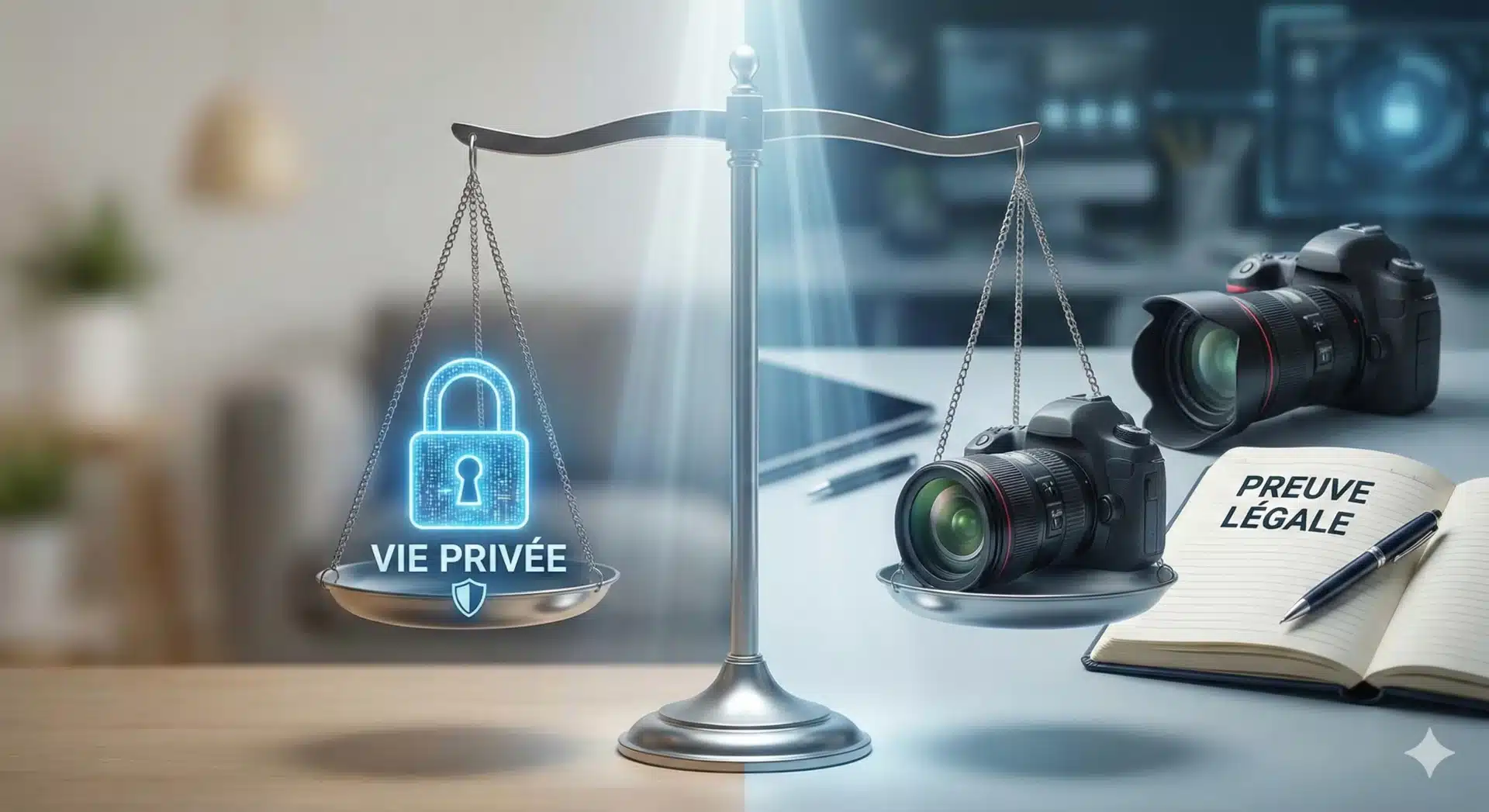
At Inveny, we perform a precision-based profession. We navigate a strict line: the balance between the right to evidence (necessary for your defense) and respect for privacy (protected by law).
It is precisely our mastery of this boundary that makes our Investigations so valuable.
What a detective CAN NEVER do (The red zone)
To ensure the safety of our clients, it is essential to be aware of what is prohibited. A professional certified by the CNAPS (National Council for Private Security Activities) will systematically refuse to:
❌ Trespassing: It is strictly forbidden to enter, film, or place a microphone in a private place without consent.
❌ Hacking correspondence: Accessing an email account, WhatsApp account, Facebook account, or bank account is a criminal offense (violation of correspondence privacy).
❌ Illegal geolocation: Tracking a vehicle (GPS tracker) is only permitted under extremely restrictive and regulated conditions.
❌ Impersonating an official: It is prohibited to impersonate a police officer, an EDF agent, or a bailiff.
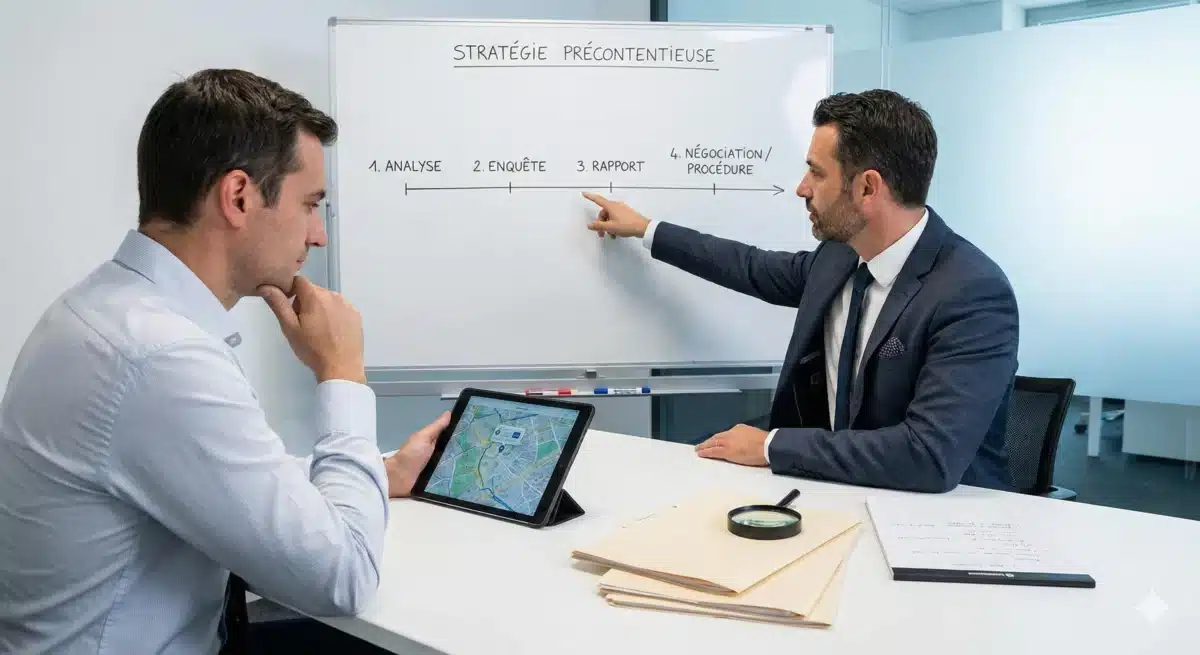
The risk for you: If you commission an Investigation , you may be prosecuted for complicity in invasion of privacy. That is why Inveny always validates the legal feasibility before accepting an assignment. It is this analysis stage that defines the winning strategy. [Read our article: The strategic value of a detective before any proceedings]
The key concept: "Proportionality"
It's the magic word. The one that unlocks legal situations. The Court of Cassation and the European Court of Human Rights (ECHR) constantly reiterate this principle: an invasion of privacy is permissible if it is essential to the evidence and proportionate to the aim pursued.
Concrete example in a company:
An employer suspects an executive of unfair competition.
Investigation (illegal)Investigation : Monitoring him 24 hours a day, including weekends with his family.
Investigation (Legal): Monitor him only during working hours, from a secondary workplace identified in advance and only during suspicious business trips.
This is where Inveny's expertise comes in: we calibrate the intensity ofInvestigation it is "just enough" intrusive to prove wrongdoing, without ever crossing the line into harassment or gratuitous spying.
Private sphere vs. professional sphere: Distinct rules
Family matters (divorce, child custody)
Family disputes require particular sensitivity. Protecting children, respecting the privacy of spouses, and the emotional dimension of the conflict demand a measured approach.
An Investigation establish a breach of parental responsibility or demonstrate a situation that is incompatible with the interests of a child. However, it must never constitute unwarranted intrusion. The family court judge will pay particular attention to the proportionality of the means employed.
In labor law
Investigations in the workplace raise specific issues. Furthermore, labor courts (CPH) are known for protecting employees and, in particular, their privacy.
An employer may legitimately wish to investigate misconduct. However, surveillance must never be permanent, concealed in an unlawful manner, intrude into private life (home, children's school, etc.) or be disproportionate.
Labor law also imposes information obligations in certain cases, particularly with regard to monitoring devices.
The detective then intervenes within a strictly defined framework, often in coordination with legal counsel, in order to ensure the process is secure.
The boundary is not blurred, it is demanding.
Contrary to what one might think, the line between Investigation and invasion of privacy is not vague. It is precisely defined by case law and legislation. It requires competence, discernment, and mastery of the regulatory framework.
In a context where data protection and individual freedoms are increasingly scrutinized, this expertise is becoming a key criterion for credibility.
Hiring a private investigator does not mean circumventing the law. It means using a legal tool to establish facts when your interests are at stake. The search for truth is only effective if it takes place within a controlled framework.
If you have questions about the legality of a situation or the possibility of launching an Investigation your particular context, a preliminary discussion can help clarify the issues and assess the proportionality of an intervention.
Why legality is your best protection
Some customers sometimes ask us, "But can't you just get the information, no matter how? Can't you hack into the phone or locate it?" Our answer is always no. Not just for ethical reasons, but also for practical ones.
"Dirty" evidence:
Will be rejected by the judge.
Will give the opposing side ammunition to attack you.
Will destroy your credibility.
Conversely, an Investigation by Inveny in accordance with best practices is robust evidence. It commands respect from the opposing party and often encourages an amicable settlement even before the trial.
Are you unsure about the legality of your suspicions? Don't take any risks. A preliminary consultation allows us to assess what can (or cannot) be done in your specific case.
FAQ: Your questions about legality and privacy
Is it permissible to take photographs of someone without their knowledge?
Yes, if the person is in a public place and these photos are intended to be used as evidence in court (and not to be published on the internet). Case law considers this to be legitimate within the framework of the right to evidence, provided that it is proportionate.
Can a detective access bank accounts?
No. Access to bank files (FICOBA) is reserved for bailiffs and magistrates with an enforceable title. However, a detective can reconstruct an individual's assets or lifestyle throughInvestigation and open data analysis, which is often sufficient to prove concealment.
Is stalking considered harassment?
No, if it is carried out by a certified professional (ARP) for a limited period of time and without contact with the person being monitored. It becomes harassment if it is visible, oppressive, or repeated without legitimate reason. That is the difference between an amateur and a professional like Inveny.
Can a detective's report be used in a divorce?
Absolutely. Evidence of adultery or proof of misconduct obtained by a private investigator is admissible in French law (Article 259 of the Civil Code), provided thatInvestigation violate any domicile or strict privacy rights.
To understand how to use this report: [See our article on the admissibility of evidence]