Behind this question lies a legitimate concern. An Investigation an investment. If the document produced ends up in the trash or is rejected by the court, the effort is wasted. Worse, it is counterproductive.
So, let's be clear right now: Yes, a private investigator's report is admissible evidence in court. But be careful. Not just any report. And not just any old way.
The legal reality is more nuanced—and more demanding—than we think.
Table of Contents
1. A regulated profession, therefore a recognized voice
2. The question is not "Is it admissible?" but "Is it conclusive?"
3.Investigation reportInvestigation bailiff's report: the winning combination
4. In which cases does the report make a difference?
5. The Inveny approach: Writing for the judge
6. FAQ:Investigation in brief
A regulated profession, therefore a recognized voice
We need to dispel an old misconception: detectives are not unofficial "informants." In France, private detectives—legally known as Private Investigation Agents (ARP) —are regulated professionals.
It is subject to Book VI of the Internal Security Code.
The profession is defined by law inArticle L621-1 of the Internal Security Code.
He must be certified by the CNAPS (National Council for Private Security Activities).
He is bound by professional secrecy.
Why is this so important? Because a report signed by anInvestigation director is not just a simple testimony. It is a piece of evidence submitted for consideration, just like a bailiff's report or an accountant's assessment. Civil, commercial, and labor courts examine our reports on a daily basis.
The question is not "Is it admissible?" but "Is it conclusive?"
In civil law, the principle is freedom of evidence. You can prove your case by any means, as long as the evidence is obtained fairly. The judge will not ask , "Do I have the right to read this report?", but rather , "How much weight should I give it?"
For a judge to rely on our report to make a decision, they must validate a strict mental checklist:
Criterion #1: Loyalty
The end does not justify the means. Evidence obtained through fraud, violence, or unfair tactics will be disregarded.
Example: If we record a private conversation without the knowledge of the individuals involved, it is illegal and inadmissible.
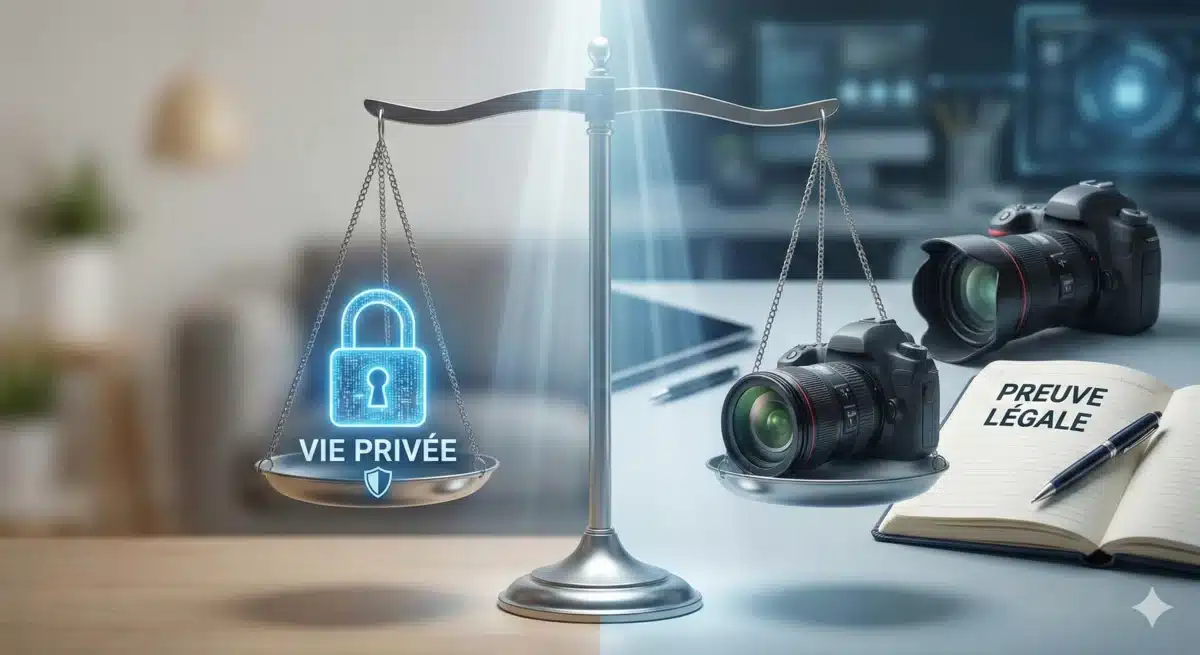
Conversely, if we observe facts that are visible from the public highway, this is fair game. This is where the line is blurred. To understand what is permitted and what is prohibited, see our article: [Privacy and Investigation How far can a detective legally go?]
Criterion No. 2: Proportionality
The invasion of privacy must be proportionate to the intended purpose. Monitoring an employee suspected of theft during working hours is proportionate. Following them on vacation with their family is not.
✅ Criterion #3: Absolute objectivity and accuracy
This is Inveny's trademark. Judges hate assumptions. An effective report does not say , "At 2:30 p.m., Mr. X seemed nervous before getting into his car." It says: 2:30 p.m.: Mr. First Name Last Name left Building A located at [ADDRESS], looked left and right, then got into a black X-brand vehicle with license plate number [PLATE] before driving away." The investigator does not judge. He observes accurately and objectively.
Investigation ReportInvestigation Bailiff's Report: The winning combination
These two professionals are often pitted against each other. This is a strategic mistake.
The bailiff (Commissioner of Justice) takes an official "snapshot" at a given moment. It is indisputable, but he cannot wait in a car for 10 hours.
The private investigator makes the "movie." He proves recurrence, habit, movement.
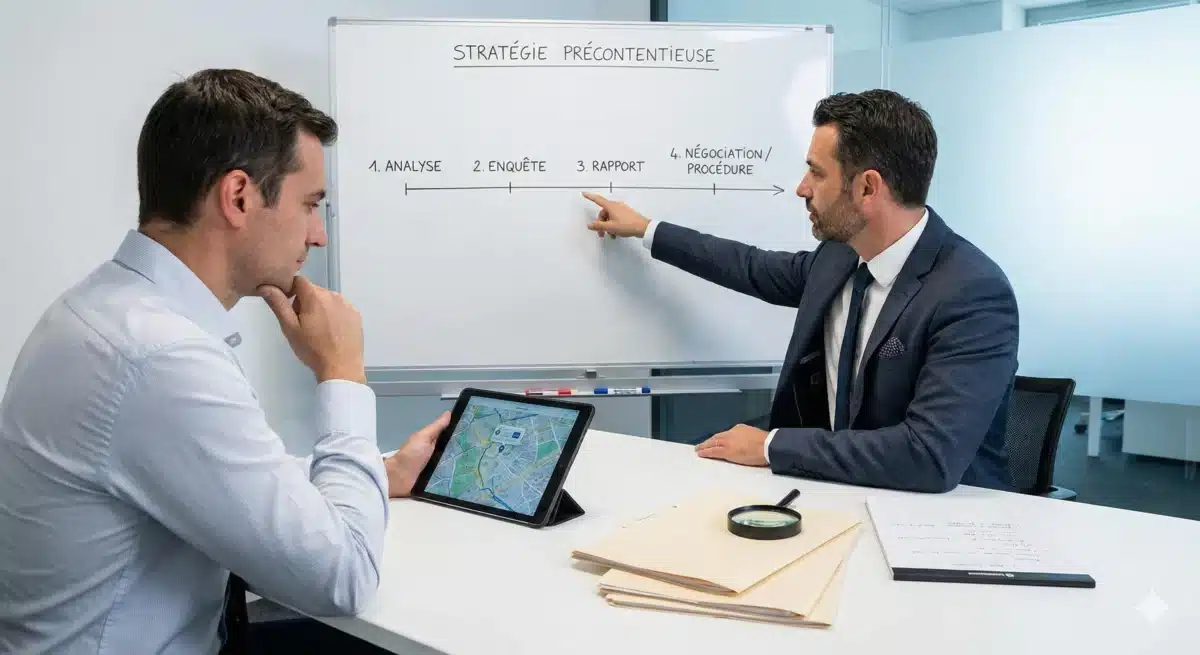
The winning strategy? UseInvestigation to identify the perfect moment to call in the bailiff. It is this meticulous preparation that makes it possible to "bulletproof" a case. Read our article on the complementary roles of Judicial Officers (Bailiffs) and Private Investigators.
In which cases does the report make a difference?
Case law is replete with examples where the detective's report was the determining factor in the court's decision.
At the labor court: To prove undeclared work during sick leave, breach of a non-competition clause, or theft of goods.
In commercial court: This is the ultimate weapon against unfair competition, customer poaching, or disparagement.
At Familial: To prove a hidden lifestyle (in the context of compensatory benefits) or behavior that is dangerous for child custody.
In criminal cases: The report does not replaceInvestigation , but it allows a "turnkey" complaint to be filed, with specific facts, thus avoiding dismissal in the case of a Investigation . Or to review the facts after a decision has already been made, which is known as aInvestigation .
Read also: [Why is conducting an Investigation any proceedings decisive?]
The Inveny Approach: Writing for the Judge
Not all reports are created equal. A poorly written, inaccurate, or emotional report can be destroyed by the opposing counsel in a matter of minutes.
At Inveny, we draft our reports with one thing in mind: legal "survivability." Every paragraph is designed to withstand attacks from the defense.
Time and location accuracy.
Citation of case law related to the case.
Appendices with time-stamped and/or geolocated photos.
Neutral and factual style.
- Mandatory information: legal framework, assigned mission, list of CNAPS approvals, etc.
We are not trying to impress our client. We are trying to convince the judge who will read the case file in six months.
Admissibility is not a matter of chance, it is a technique. If you are considering taking action and wondering about the value of a Investigation in your situation, a preliminary discussion will enable you to accurately assess the value and scope of such a document.
FAQ: Admissibility of evidence in 2026
Is a detective's report as valid as a police report?
No. The police report is considered conclusive evidence for traffic violations until proven otherwise. The detective's report is considered free evidence subject to the judge's discretion. However, if it is detailed and consistent, the judge may decide to base their decision solely on this report (Court of Cassation ruling).
Can the opposing party challenge the report?
Yes, that is the adversarial principle. The opposing lawyer will try to find a flaw (illegality, inaccuracy). That is why choosing a certified and rigorous investigator such as Inveny is crucial to ensure that the report "holds up" in the face of adversarial questioning.
Can photos taken by a private investigator be used in court?
Yes, provided that they were taken from a public place or a place open to the public, and that they do not violate privacy (inside a home). The photo is used to illustrate the investigator's written report.
How long is anInvestigation report validInvestigation
There is no legal expiration date, but evidence weakens over time. A report dating back two years will carry less weight in proving a current situation. It is advisable to act quickly after the report is submitted.